
How Does E-E-A-T Influence Your SEO Strategy?
E-E-A-T Influence Your SEO Strategy?
Google’s search algorithms have evolved dramatically over the years. One of the most significant updates that businesses and content creators must focus on is E-E-A-T (Experience, Expertise, Authoritativeness, and Trustworthiness). Understanding E-E-A-T is critical for improving your site’s visibility and ranking on search engines.
In this blog post, we will explore the importance of E-E-A-T, how to optimize for it, and why it plays such a pivotal role in Google’s ranking system. Let’s go deep into the factors that determine whether your content will be deemed credible enough by Google’s algorithms to rank highly.
Why Is E-E-A-T Important for SEO Success?
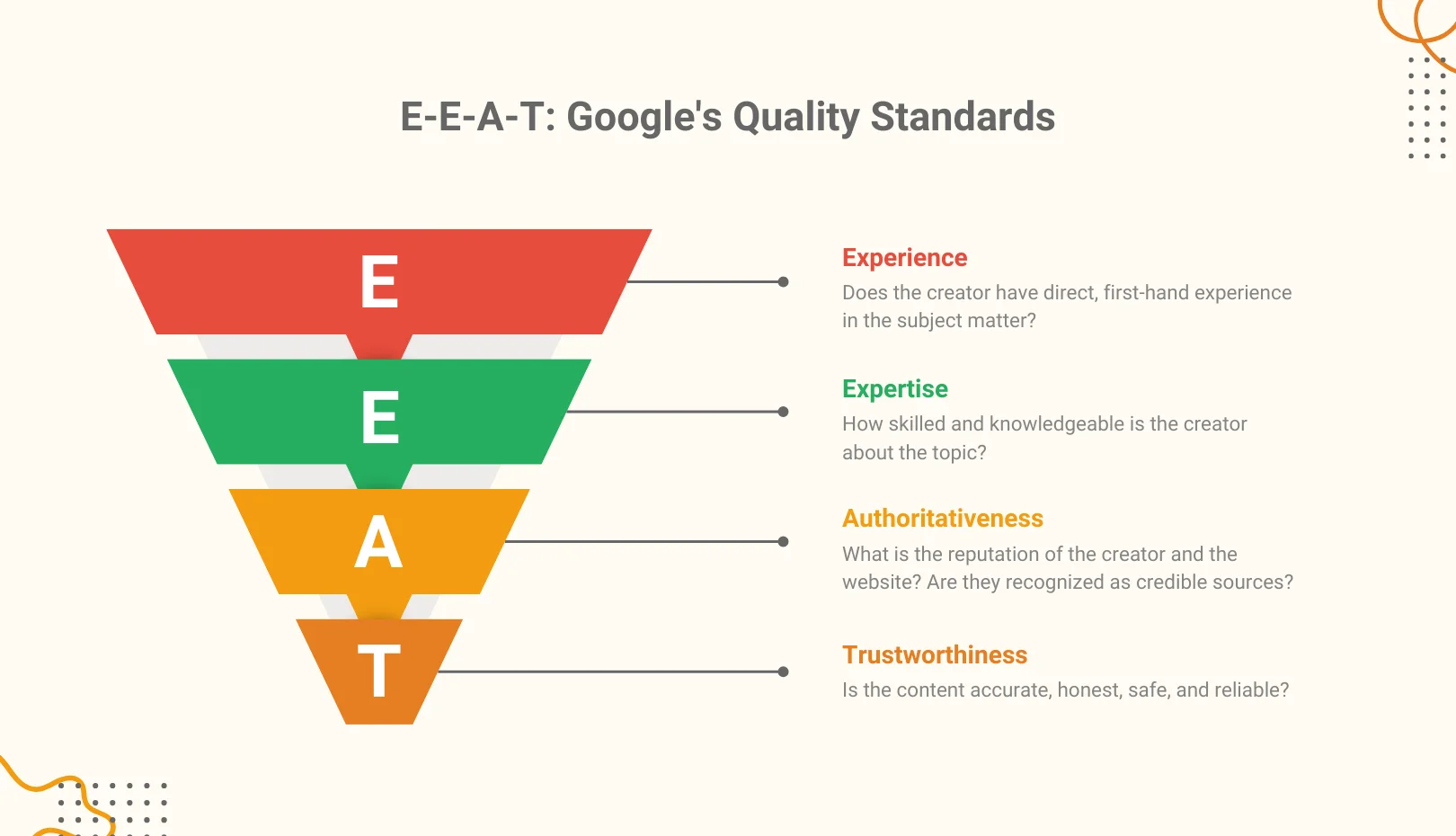
Google wants to show helpful, reliable, and high-quality content in search results. To do this, it looks at E-E-A-T, which stands for:
🔹 Experience – Does the writer have real-life experience with the topic? For example, a travel blog written by someone who has actually visited the place is more valuable than one written by someone who hasn’t.
🔹 Expertise – Is the writer knowledgeable in the field? A fitness article written by a certified trainer will be taken more seriously than one written by a beginner.
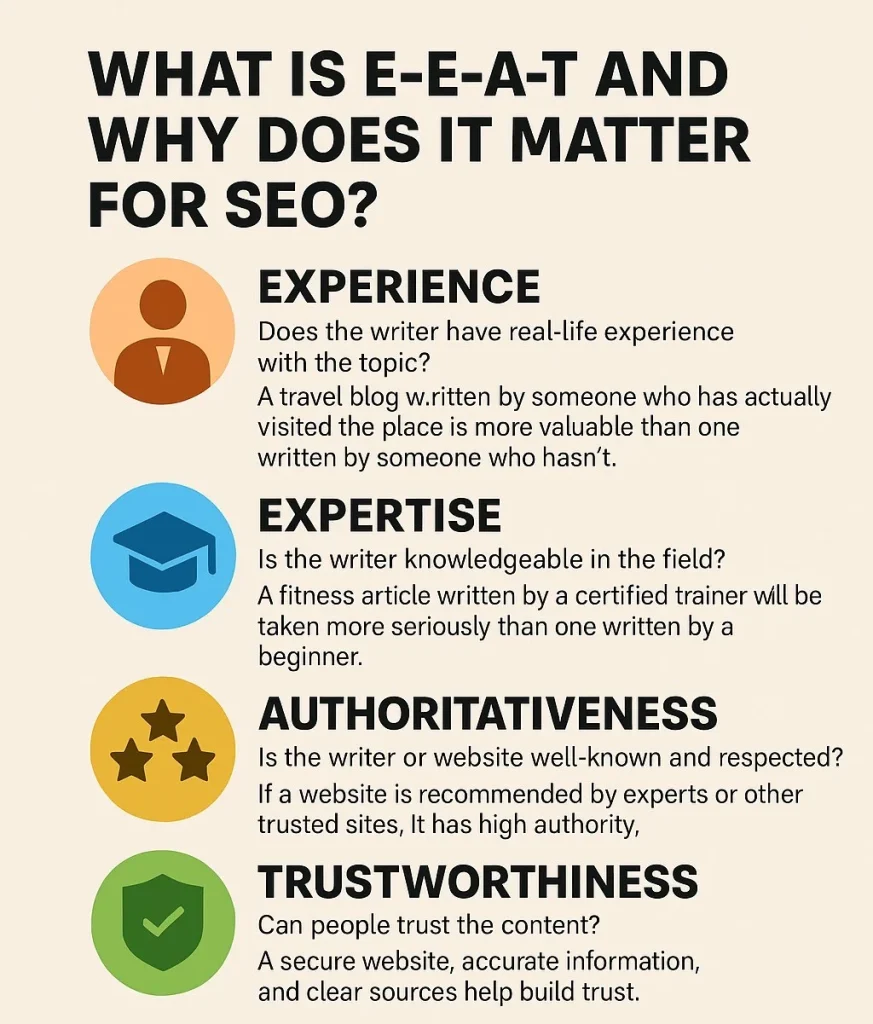
🔹 Authoritativeness – Is the writer or website well-known and respected? If a website is recommended by experts or other trusted sites, it has high authority.
🔹 Trustworthiness – Can people trust the content? A secure website, accurate information, and clear sources help build trust.
How Does E-E-A-T Help Your Website Rank Higher?
Google uses E-E-A-T to decide which websites deserve top rankings, especially for topics like health, finance, and safety. If a website gives wrong or misleading information, it can harm users—so Google ranks only trustworthy content higher.
What Are the Best Ways to Improve EEAT ?
✅ Show Author Info – Add bios, qualifications, and real experience.
✅ Get Links from Trusted Websites – Being mentioned by reliable sources builds authority.
✅ Use Accurate Sources – Fact-check information and cite trusted websites.
✅ Make Your Website Secure – Use HTTPS, privacy policies, and contact details.
✅ Encourage Reviews & Testimonials – Positive feedback increases trust.
By improving E-E-A-T, your content can rank higher on Google, attract more readers, and build a strong reputation online.
Why Is EEAT a Must-Know for SEO in 2025?
When Google evaluates content, it uses algorithms to assess these four pillars. Websites with high E-E-A-T scores tend to rank better in search results. So, why does this matter?
- Better User Experience: Google wants to prioritize content that genuinely benefits the user. Content creators who focus on providing useful, well-researched information will see higher rankings.
- Establishing Credibility: Trust and credibility go hand-in-hand. As a result, Google values content that is authored by experts and backed by authoritative sources.
- Long-Term Success: Websites that prioritize E-E-A-T are likely to see sustainable SEO improvements over time, rather than quick spikes followed by a drop.
How Can You Optimize Your Content for EEAT?
Now that we understand the importance of E-E-A-T, let’s discuss how you can optimize your content to align with Google’s standards.
- Showcase Author Expertise
- Author Bios: Make sure each piece of content has a detailed author bio that showcases their experience and qualifications. For example, if you’re writing about digital marketing, make it clear that the author is an experienced digital marketer.
- Cite Credentials: Whenever possible, include links to professional certifications or educational backgrounds that prove the author’s expertise.
- Author Bios: Make sure each piece of content has a detailed author bio that showcases their experience and qualifications. For example, if you’re writing about digital marketing, make it clear that the author is an experienced digital marketer.
- Create High-Quality, Comprehensive Content
- User Intent: Always address the searcher’s intent in your content. If someone is looking for a tutorial, provide step-by-step instructions. If they’re seeking information, give detailed answers backed by data and examples.
- Depth of Information: Google rewards content that is comprehensive and answers the user’s question in full. Don’t just skim the surface. Instead, provide in-depth analysis or insights into your topics.
- User Intent: Always address the searcher’s intent in your content. If someone is looking for a tutorial, provide step-by-step instructions. If they’re seeking information, give detailed answers backed by data and examples.
- Get Backlinks from Authoritative Sites
- Build Relationships: Partnering with authoritative websites in your industry can help establish your content’s credibility. For example, getting featured on well-known blogs or publishing guest posts can boost your domain authority.
- Link Building: Focus on earning links from reputable sites that are related to your industry. Quality backlinks from trusted sources are a signal of your site’s authority and trustworthiness.
- Build Relationships: Partnering with authoritative websites in your industry can help establish your content’s credibility. For example, getting featured on well-known blogs or publishing guest posts can boost your domain authority.
- Focus on Trust Signals
- Secure Your Site: Ensure that your website uses HTTPS for secure browsing. Google gives preference to secure sites, and users are more likely to trust a site that guarantees their safety.
- Positive Reviews: Accumulating positive reviews and testimonials from users or industry professionals can improve your trustworthiness in Google’s eyes.
- Transparent Policies: Always have clear privacy policies, terms and conditions, and contact information available on your site.
- Secure Your Site: Ensure that your website uses HTTPS for secure browsing. Google gives preference to secure sites, and users are more likely to trust a site that guarantees their safety.
- User-Generated Content and Engagement
- Encourage Reviews: User-generated content such as reviews and comments signals that your site is active and engaging. Encourage customers to leave feedback about their experiences.
- Social Proof: Social media mentions and shares from credible sources add to your trust factor. Keep your social media profiles active and linked to your website.
- Encourage Reviews: User-generated content such as reviews and comments signals that your site is active and engaging. Encourage customers to leave feedback about their experiences.
Case Studies: Websites Excelling in E-E-A-T
- BBC: As one of the most authoritative news outlets, BBC’s website benefits from high levels of E-E-A-T, which is why it consistently ranks at the top for relevant news topics.
- WebMD: For health-related topics, WebMD demonstrates a high degree of expertise and trustworthiness. Their content is backed by medical professionals, making it a go-to resource for health information.
- Moz: A leading authority in SEO, Moz’s blog offers detailed, expert-level content, regularly updated to align with the latest SEO trends.
What Are the Biggest Challenges in Using E-E-A-T?
While focusing on E-E-A-T is crucial, it’s not without its challenges. Here are some obstacles you might encounter:
- Building Authoritative Backlinks: It can be difficult to acquire quality backlinks, especially for new sites.
- Keeping Content Up-to-Date: To maintain authority, content needs to be updated regularly to reflect the latest information, trends, or statistics.
- Overcoming Misinformation: Even the most credible sites can face challenges in combating misinformation. Google uses sophisticated systems to detect spammy or harmful content, and keeping your content accurate is essential.
Where Is E-E-A-T Headed in the Future of SEO?
As Google continues to refine its algorithms, E-E-A-T is expected to remain at the forefront of SEO strategies. Content creators and businesses must continuously adapt to these evolving standards to maintain high rankings.
- Core Web Vitals: Google’s focus on user experience will continue to expand, so it’s essential to optimize not only for E-E-A-T but also for technical factors like page load speed, mobile usability, and interaction.
- AI and Content Creation: As AI-generated content becomes more prevalent, it will be crucial to ensure that your content maintains a human touch, especially in areas where expertise and experience are critical.
Conclusion
In today’s competitive online world, ranking high on Google requires more than just keyword optimization. By focusing on E-E-A-T, you can not only improve your search engine rankings but also establish a reputation for delivering high-quality, trustworthy content. This is essential for both short-term traffic gains and long-term SEO success.
Take the time to review your content strategy and align it with Google’s focus on experience, expertise, authority, and trust. Your website’s performance in the SERPs will thank you!
FAQ
1. What does E-E-A-T stand for?
E-E-A-T stands for Experience, Expertise, Authoritativeness, and Trustworthiness. These are quality indicators Google uses to evaluate content and determine how well it should rank in search results.
2. Why is E-E-A-T important for SEO?
E-E-A-T helps Google identify high-quality and reliable content, especially for topics that can significantly impact users’ lives (e.g., health, finance, safety). High E-E-A-T improves your chances of ranking well in SERPs.
3. How can I improve the E-E-A-T of my website?
Here are key strategies:
- Add detailed author bios with credentials
- Cite reliable sources and link to them
- Use HTTPS and publish transparent privacy policies
- Get backlinks from authoritative websites
- Encourage genuine user reviews and engagement
4. Is E-E-A-T a direct ranking factor?
Not exactly. Google doesn’t measure E-E-A-T with a direct score, but it uses various signals that reflect E-E-A-T principles, such as backlinks, content quality, and site security.
